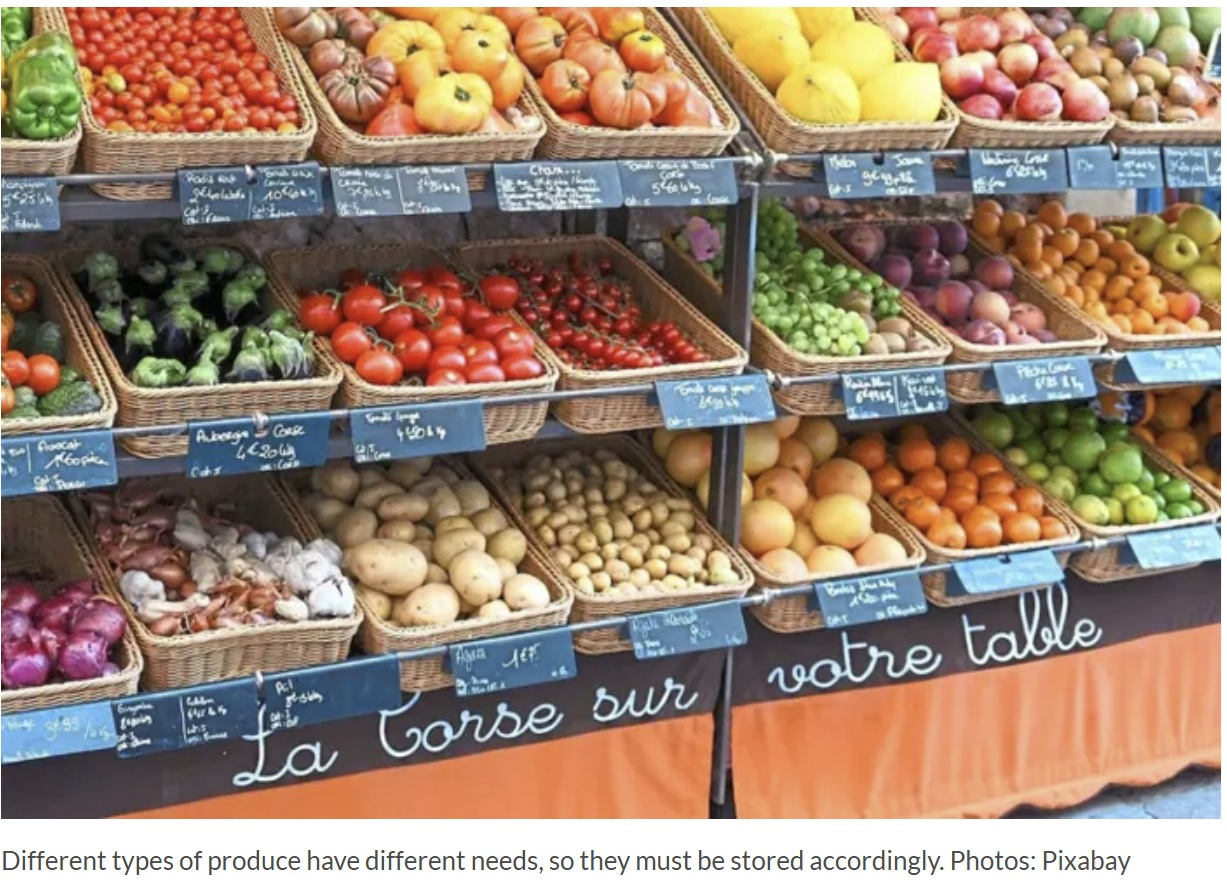
2) Different foods have different needs.
Herbs last longer when treated like flowers, trimmed and placed in water, while harder herbs can be wrapped in a damp towel and stored in the fridge.
Root vegetables like carrots can be kept in water to maintain crispiness. Separating leafy tops can extend the shelf life of carrots and beets.
Where you store produce can affect both how it tastes and how it lasts. The texture and flavour of tomatoes, for example, are best preserved at room temperature, even if refrigeration can slow their spoilage, said Deering.
Whole garlic should be kept in a cool ventilated space, while cut or peeled garlic belongs in the fridge.
Potatoes and onions are best stored outside the fridge in a cool, dark, well-ventilated place, like a pantry or cabinet, but they shouldn’t be kept together.
“You want to keep them away from one another because they actually can make each other spoil faster,” said Sharp.
Mixing fruits at different stages of ripeness also can shorten shelf lives. As fruits ripen, they release ethylene gas, a natural compound that speeds up the ripening process in nearby produce. So storing very ripe bananas next to greener ones or alongside other fruits can cause everything around them to ripen and spoil more quickly, Deering said.
3) Confusion about what’s actually safe to eat also drives food waste.
The US Food and Drug Administration (FDA) estimates that confusion over food labels accounts for about 20% of consumer food waste, as many people misinterpret the “purchase-by” dates as indicators of safety.
Other food gets trashed when it doesn’t look perfect, according to Sharp, who notes that “a little ugly is not the same as unsafe”.